Mueller® provides solutions for quality drinking water
Date:
Publication:
Mueller® provides solutions for quality drinking water
Mueller’s portfolio of brands provides extensive solutions to help cities provide safe drinking water and, when used together, help increase water quality. These products help cities and utilities to better prepare for the future and be proactive instead of reactive, and increase efficiency and potentially save money.
The Hydro-Guard® connected flushing system helps move water through a distribution network when there is not enough demand to turn the water over, preventing it from aging in the line. At the dead end of a line, water can stagnate if there is not enough movement. On larger lines, there are often not enough homes or businesses to move fresh disinfected water to the dead-end points. An automatic flusher can be used to address these situations where standard demand is insufficient for maintaining a consistent water turnover rate. The flusher can be programmed to flush water lines once a week, daily, for a few minutes a day or for an hour a day.
Turning the water over helps manage disinfectant byproduct levels in the lines. Bringing better, disinfected water to customers helps increase water quality and provides safer drinking water. One such case is Liberty Lake in Washington state that used the Hydro-Guard 100 series to address an E.coli discovery by a resident in its waterline before Thanksgiving. Water operators discovered the contamination was from three dead-end lines that were not adequately flushed during daily use, and due to fall sprinkler blow-outs, E. coli entered part of the water supply.
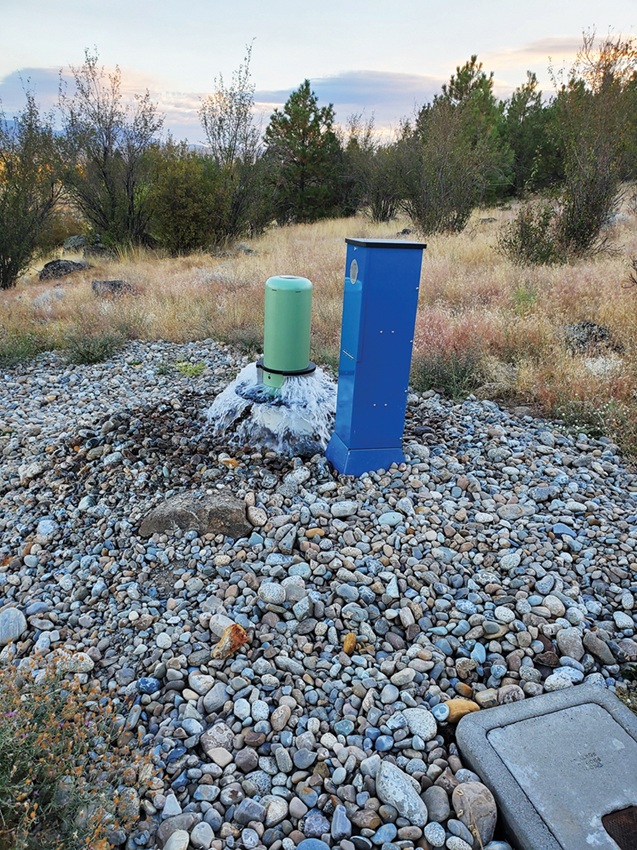
Three custom Hydro-Guard automatic flushing systems with water quality sampling stations were installed by Mueller in just one day. Operators programmed automatic flushing of the dead-end lines weekly, and the sampling stations went into position within 18 inches from the flushing systems to ensure an accurate sample was collected. This allowed Liberty Lake residents to get the “all clear” for clean water the day before Thanksgiving.
Hydro-Guard has different flushing solutions for different environmental conditions. For warmer climates the system can discharge flushed water to the ground, or it can be discharged directly to a storm pond, sewer, swale, or other discharge point. For cold climates, there are models that can discharge flushed water to the ground, or the discharge can be directed to a dedicated point, such as a pond or storm sewer.
Mueller’s FC300 is one option for cold climates. The only part of this flushing unit above ground is a manhole cover, all flushing is below ground. This system is constructed using the Mueller Thermal-Coil® meter box with an integrated meter yoke in addition to the flushing system. This design allows it to be lowered below the frost depth to protect it from freezing and also be worked on above ground when necessary. The most common bury depth for areas with cooler temperatures is between 36 and 84 inches deep.
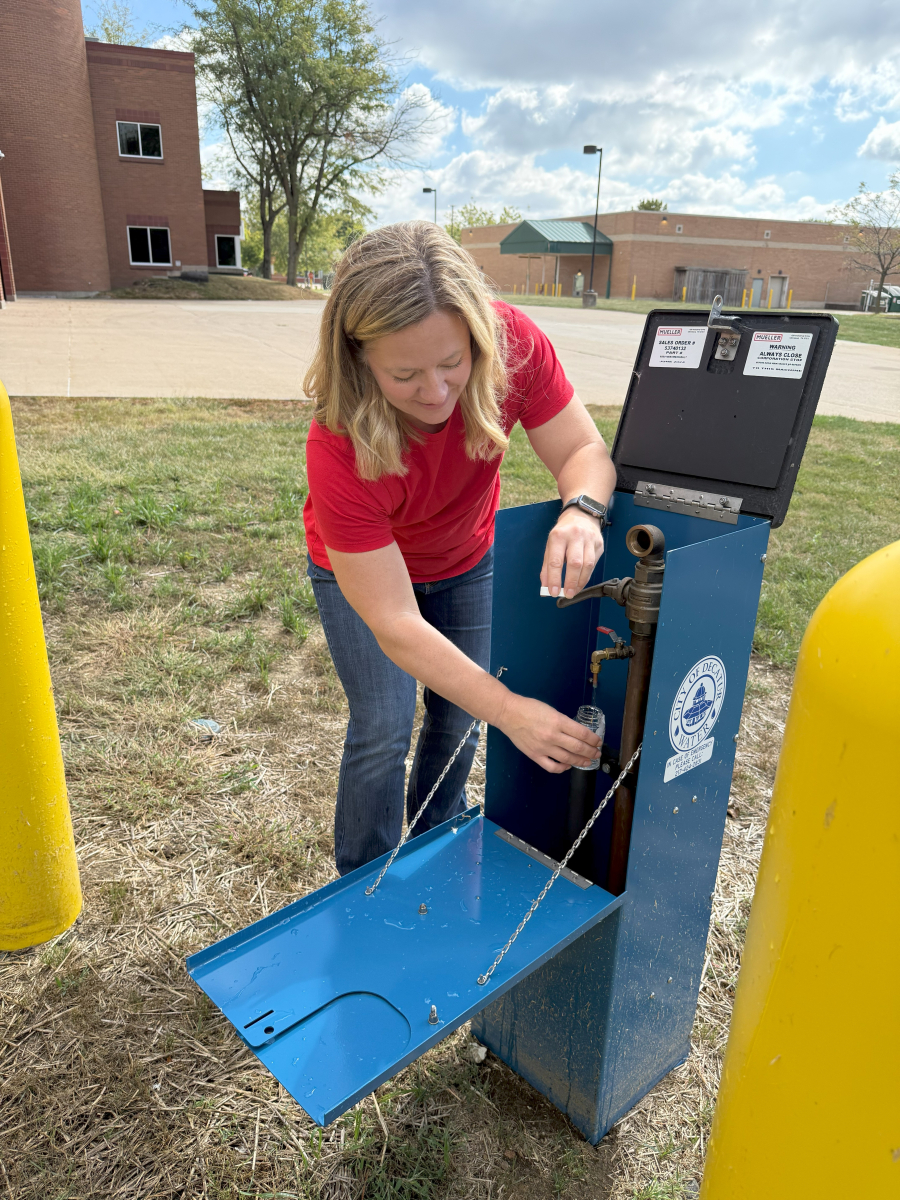
Another water quality device from Hydro-Guard is the sampling station. The Connected Sample Stations also allow water utilities to monitor water pressure and temperature from the sample location. The valve opens and a water sample is collected, and a digital record is created when each sample is taken. If something in the water tests positive, public works employees can go back and see when the sample was taken and check the corresponding water temperature and pressure to determine what is causing the condition.
“Unique to Mueller is the design in connectivity between the flushing system and the sampling station,” Harold Mosley, Mueller territory sales manager, described. “Not all flushers have it, but they all have the ability to have it. The sampling station integrates a pressure logger that monitors the distribution of water temperature and pressure. When it comes to water quality, water temperature is a factor. High temperatures have a significant effect on chlorine in the line,” Mosley added.
A logger in a flushing system consistently measures temperature. With remote access, an employee can log in and program flushing during a specific timeframe to bring cooler water through the lines. This is important in regions with warm temperatures and shallow water lines.
Recently, Decatur, Ill., installed 19 Hydro-Guard blow-off sampling stations at critical points throughout the utility’s distribution network. The move helped eliminate the need to coordinate access to buildings and saved approximately five minutes of flushing per sampling location. Now the city collects samples at optimal times without scheduling conflicts because of a connection right at the water main.
During installation, Decatur also added 13 Mueller pressure loggers at the extremities of the system, in high demand areas and at pressure zone boundaries. The system gives information to operators in real time so they can troubleshoot pressure issues and monitor freezing conditions. Over the next several years, the city plans to install an additional 60 sampling stations as well as integrate pressure loggers into the sampling stations.
Pressure monitoring and management systems maintain adequate pressure throughout the distribution system. Thresholds can be set and the system can send an alert if it goes too high or too low. This allows operators to see trends and determine the cause of pressure fluctuations. It can also alert staff to a significant pressure drop, indicating a break in the system, so personnel can quickly be dispatched to fix the issue.
A control valve is often set and then forgotten for years.
“But demand is not static, it is always changing,” Mosley explained. Using an advanced pilot valve that can learn the peak and off-peak operational times of a distribution network, reduces the risk of over pressurizing a water line, which can lead to leaks or line breaks. By optimization pressure in the system, utilities can also reduce operational costs related to pumping.
The advanced pilot valve dials the pressure back during off-peak hours and dials the pressure up when necessary. It relies on the pressure monitoring system to actuate it and understand what the system needs and when it needs it. This lowers energy costs by not over-pumping. It also gives health reports on the control valve. If the pressure bounces around on the trend map, the control valve may need some work.
The Echologics® leak detection system helps to find leaks with constant monitoring. If a leak is detected that information is relayed to the utility. This leak detection system can find very small leaks, helping utilities to prioritize repair and avoid major breaks and disruptions.
“The real value in Mueller’s approach is that we have a diverse portfolio, and it all plays well together,” Mosley stressed.