Utah City Deploys Collaboration, Innovation on AMI Upgrade
Date:
Publication:

By David Weger
Utah is facing a delicate balancing act. According to the 2020 U.S. Census, it was the fastest-growing state in the country with a population projected to double by 2060. It is also located in one of the driest regions in the United States.
Utah's outdoor watering accounts for more than 60% of residential water use, while indoor use makes up 40%. To tackle this high-water consumption, state leaders aim to reduce overall outdoor water use by 17% by the end of fiscal year 2030. This goal will require system-wide innovation and changes in community habits.
In 2022, the state legislature passed HB 242, followed by SB 251 in 2023. These bills led to Utah Code 73-10-34, which requires that all secondary pressurized irrigation connections be metered by Jan. 1, 2030. By measuring indoor and outdoor usage separately, state and local leaders are working with water suppliers to shift the public mindset from viewing water as unlimited to one that practices responsible conservation.
A significant advancement was achieved through the state's Transparent Water Billing Grant Program. The program's goals are straightforward yet impactful: provide customers with clear information about their water use, promote conservation and enhance public access to data.
Cedar Hills, a city with approximately 10,000 residents, was among the first to utilize the grant program. The city owns and operates a water utility system that serves roughly 2,600 residential connections, each with two meters per address: one for drinking water and one for Pressurized Irrigation (PI). Snowmelt accounts for a major source of its water supply. Since snowfall can vary greatly from year to year, it's crucial that water conservation remains top of mind.
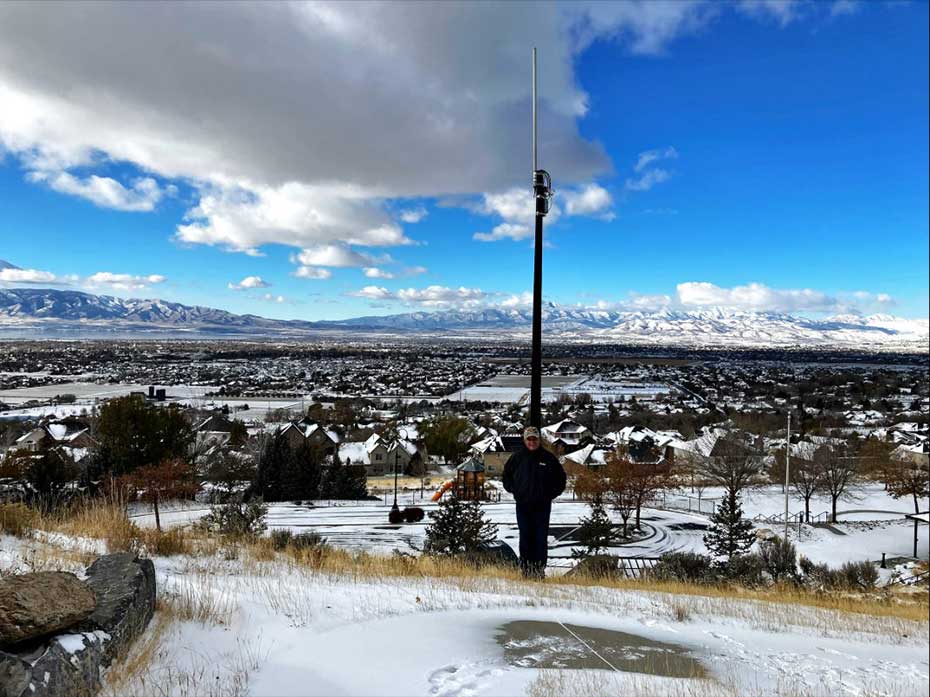
"Trying to provide water to customers in the desert is already a challenge," said Kevin Anderson, Cedar Hills Public Works Director. "We must spend a lot of time teaching residents how little water it takes to keep plants alive, so we don't waste water. That's why we've been pushing smart meters, sprinkler controllers and water usage apps."
Data Insights Drive Behavioral Changes
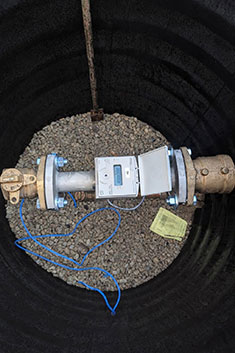
To meet new Utah water conservation goals, Cedar Hills installed additional residential Solid-State Meters (SSMs) from Mueller Systems in 2024. At the same time, Cedar Hills also moved from charging a flat rate for PI water to billing based on actual water use.
The data generated by the SSMs — available to the municipality through a utility portal and accessible to consumers through a separate Customer Engagement Portal (CEP) — provides insight into actual water use, which can support conservation efforts, help maintain a reliable water supply and support usage-based billing.
Mueller Systems' Advanced Metering Infrastructure (AMI) solution provides Cedar Hills with advanced communication, data management and analytics for near real-time data and consumption insights, helping residents save water. The AMI solution enables Cedar Hills to improve billing accuracy, obtain alerts to potential leaks more efficiently and gain comprehensive insights into its entire water system through a single, scalable interface.
In addition, Cedar Hills wanted an effective way to communicate detailed and customized information to its residents, especially as the city prepared to start billing for PI water use in July 2025. Public Works officials were looking for a customer portal vendor that could display both consumers' indoor and PI water consumption data as well as improved water-use communications.
Cedar Hills' solution was to implement Mueller Systems' SentryxTM water intelligence platform and AquaTrax's consumer portal, integrating advanced metering with near real-time, customer-friendly insights. Using an Application Programming Interface (API), the AMI system transmits near-real-time water usage data to support the customer portal, turning metering data into valuable usage insights. The consumer portal allows Cedar Hills to deploy PI billing without increasing customer service calls.
Through the customer engagement portal, accessible via the web or mobile app, residents can now view their water usage at monthly, daily, or even hourly intervals and easily pay utility bills through an integrated interface. They can distinguish between indoor drinking water and outdoor potable irrigation use, monitor their bills and spot unusual spikes, and set customized usage and leak alert notification preferences. Additionally, residents can track their progress toward conservation goals. Through the admin portal, utilities can perform leak management, track usage analytics across custom time spans, and monitor customer engagement.
"Cedar Hills had a tight deadline as they wanted to roll out their new consumer portal along with their new pressurized irrigation metered billing," said David Carrillo, Solution Success Manager at Mueller. "AquaTrax was able to quickly understand Cedar Hill's challenges and deliver on time, which allowed residents to understand their water consumption data before they got their first pressurized irrigation bill."
"Too many people had no idea they were overwatering. Now every customer has the opportunity to watch their usage and make changes, saving them water and money." Kevin Anderson, Cedar Hills Public Works Director
Positive Results Keep Flowing In
The changes took effect immediately. In July, when PI billing started, a few residents were surprised by their high usage and bills. However, within a few weeks, many customers adjusted their irrigation timers and reduced their water use.
According to Melanie Clark of Cedar Hills Public Works, successes have continued since July's metering launch. One residential customer reduced water use from approximately 42,000 gallons, in July and in August, to roughly 18,000 gallons, resulting in a savings of approximately 24,000 gallons without any noticeable harm to their landscape on their 0.16-acre property.
"I spoke with a resident who had a leak in their sprinkler system. They said it was nice to receive a continuous usage alert from the customer portal and saw firsthand the change of usage (a decrease of 50%) once they fixed the leak," said Clark.
Currently, out of 2,600 residential connections, 883 have started using the customer portal. That's nearly 34% of residents participating in the first year. As program awareness and customer portal adoption grow, water usage is expected to decrease.
Analyzing a subset of 20 customer portal accounts, the early results indicate that conservation efforts were primarily driven by customers reducing their outdoor watering. August usage totals showed a decrease of up to 50% compared to the previous year and September figures continued to show a decreasing trend.
"Too many people had no idea they were overwatering. Now every customer has the opportunity to watch their usage and make changes, saving them water and money," Anderson said. "Cedar Hills' public parks irrigation is also metered now, which has resulted in reduced watering and increased money savings, all with no noticeable changes to grass and landscaping."
For Cedar Hills, success means reducing peak demand and water waste, keeping costs affordable and encouraging widespread portal use. The city exceeded its 30% customer portal registration goal this year and now aims for 80 to 90% within five years. Community outreach includes newsletters, notices, citywide campaigns and social media.
"Without accurate data, decision-makers and planners cannot change resident behavior or make Utah's water usage sustainable efficiently," said Josh Zimmerman, conservation coordinator for the State of Utah. "Integrating metering with consumer analytics and communication bridges that gap."
By engaging with the customer portal, overall consumer awareness has increased and water-use behavior is changing significantly. Cedar Hills is also decreasing its costs by providing less water and the state is experiencing a reduction in consumption (and effectively water waste) in an arid area.
"Success comes from providing homeowners with a starting point when their bills are unusually high," Anderson said. "The detailed water usage data informs them of usage patterns and empowers them with knowledge before calling the city. It's a win-win."
Click here to read the article on Water Finance & Management.

David Weger is software product manager at Mueller Water Products. Weger has more than 30 years of experience as a software product manager for software development and manufacturing. He blends business strategy, thoughtful design and engineering insight to create applications that solve real human problems and strengthen the connection between people and the tools they use.